english version
More and more often it happens to find and listen to “popular” music that uses classical forms, and after sixty years, jazz, pop and rock have perhaps reached an almost total codification, a fact that encourages us to rethink more classical forms to find new stimuli. However, lmost all of the production nowaday tagged as “modern classical” or “post-classical,” ends up leaning towards forms too clean and polished, or towards results too dirty and approximate, being therefore either too pop for the “classic” material to be appreciable, or too classic and avant-gardish to show that beautiful and enthralling pop side that makes them a clever entertainment.
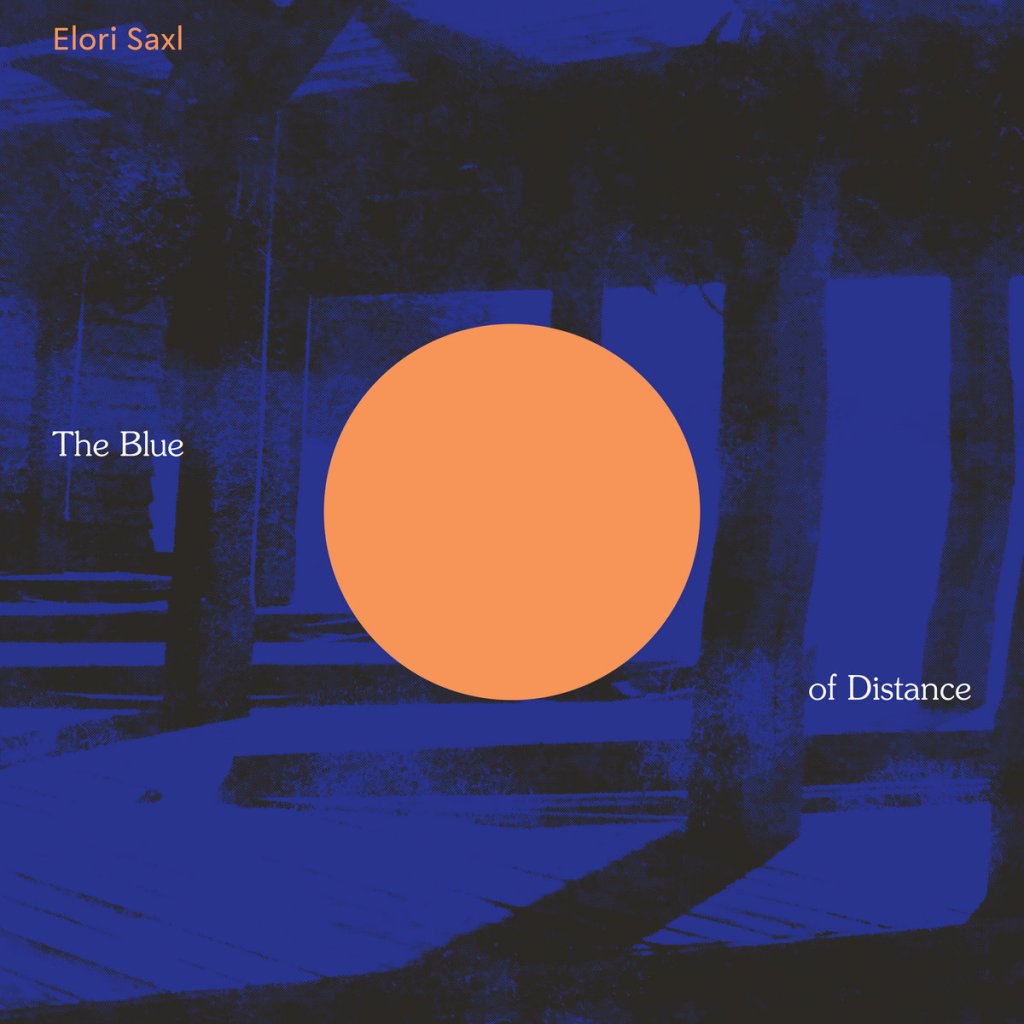
Elori Saxl Kramer (former violinist in Alpenglow, former video-maker, former composer, skater and a lot of other things… and she’s barely in her early thirty), manages to escape these pitfalls very well, and she succeeds with an album that remains in perfect balance between classicism and pop tradition, between clean and refined touches and that little amount of dirt that is needed to make everything more accessible and human. The Blue of Distance is overall an almost perfect album. Starting from the way in which acoustic instruments and electronic hocus-pocus are pigeonholed and interlocked, a blend of craftsmanship and synthetic. Starting with the splendid cover. And also starting from the title, borrowed from an expression Rebecca Solnit used in A Field Guide to Getting Lost to describe that natural phenomenon that makes distant mountains appear blue because the particles of light are somehow lost.
Elori Saxl reuses Rebecca Solnit’s concept by applying it to recollections and memory, that is, to what builds our identity and makes us what we are, especially after the great revolution of technological tools that often become unreliable substitutes for memory itself. One part of the album was made in the Adirondacks the summer of two years ago while Elori Saxl was there as a guest musician at the Blue Mountain Center, and the other half was conceived and composed a year later, on the eve of the pandemic, at Madeline Isle— a charming little island in the middle of Lake Superior in Wisconsin. Here Elori Saxl tried to recover that same environment and those same sensations that the previous summer at the Blue Mountain Center had piloted the creative process, but she realizes that even with all the technological tools of preservation and reproduction of the memory, something had gone hopelessly lost. Like the particles of light that get lost and color the mountains with blue.
This dialectic between reality and memory, between participation and virtual recreation, between nature and technology is present in The Blue of Distance in all the interweaving between scores for acoustic instruments (many played by Saxl herself) and electronic mixtures from MIDI and samples. It is such a well-balanced mixture that it is often difficult to tell what is electronic and what is acoustic. Starting from the ambient opening of “Before Blue,” a jewel of just over a minute where gentle drones recreating the sound of flowing water are counterpointed by small strokes of what would seem a piano but which could also be a violin, but it is only a door that opens, because immediately the more substantial “Blue” plunges you into a cascade of field recordings, drones, low frequencies (the same low frequencies increasingly omnipresent in ambient compositions, comes to mind KMRU’s “Klang,” or Andrée Burelli’s “Cum Sidera,” Shedir’s “Quickly Blood” “Palm Groove” by Emeka Ogboh) that almost enchant themselves in a loop that becomes a carpet for melodic phrasing of string instruments. Again: it is difficult to say where the boundary between electronics and acoustics is, which instruments are real and which virtual. Indeed, for the realization of the record Elori Saxl also tuned her violin a few tones below her to use it as a viola and cello.
But there is also a dialectic between single and collective, given that the album was born from a composition that was commissioned to Elori Saxl by the chamber orchestra of Baltimore Mind on Fire, an ensemble of 18 elements. There’s a palpable dialogue at work in all the seven sublime compositions of The Blue of Distance, a dialogue between individuality, given by the melodic lines, and concertation, that derives from a mixture of classical instruments (violas, cellos, flutes, bassoons), and if tracks like the delicate “Wave I” seem to come out of a full blown chamber ensemble, in others like the enveloping “Wave II” or the long and beautiful “Memory of Blue” human and synthetic blend perfectly in a continuous flow of synth and orchestra in full synchrony.
And the way the album is built! In an era in which the art of creating beautiful and communicative covers has been lost, with a title that is in some way a synthesis of the content, and with a track-list that follows a logical thread, The Blue of Distance shows an enormous consistency: the seven tracks tell an experience, starting from normality (“Before Blue”), the sudden change (“Blue”), the causes of that change (“Wave I” and “Wave II”) , then the return to normality that carries within it the memory of what has been (“Memory of Blue”) and finally the peace, the awareness that things are beautiful when are simple: “The Blue of Distance.”
versione italiana
Sempre più spesso capita di trovare e sentire musica che si ripiega su forme classiche, e dopo sessant’anni, jazz, pop e rock hanno forse raggiunto una codificazione pressoché totale, cosa che spinge a riprendere forme classiche per trovare nuovi stimoli. Quasi tutta la produzione via via derubricata come “classica moderna” o “post-classica” però finisce per sbilanciarsi o verso forme troppo pulite e precise o verso risultati troppo sporchi e approssimativi, e essere quindi o troppo pop perché la materia “classica” sia apprezzabile, o troppo classici e avanguardistici perché mostrino quel lato pop che li renda dei bei mezzi di intrattenimento oltre che suscitare un interesse anestetizzato.
Ebbene, Elori Saxl Kramer (già violinista negli Alpenglow, già video-maker, già compositrice, skater e un sacco di cose a appena trent’anni) riesce a sfuggire egregiamente a queste insidie, e ci riesce con un disco che resta in equilibrio perfetto tra classicismo e tradizione pop, tra rifiniture pulite e raffinate e quel poco di sporcizia che serve per rendere tutto più accessibile e umano. The Blue of Distance è in tutto e per tutto un disco pressoché perfetto. A partire dal modo in cui si incasellano e si incastrano strumenti acustici e magheggi elettronici, parte artigianale e parte sintetica. A partire dalla splendida copertina. E a partire anche dal titolo, ripreso da un’espressione che Rebecca Solnit ha usato in A Field Guide to Getting Lost per descrivere quel fenomeno naturale che fa sembrare blu le montagne lontane perché le particelle di luce in qualche modo si perdono.
Elori Saxl riutilizza il concetto di Rebecca Solnit applicandolo a ricordi e memoria, cioè a ciò che costruisce la nostra identità e ci rende quello che siamo, soprattutto dopo la grande rivoluzione degli strumenti tecnologici che spesso diventano sostituti inaffidabili per la memoria stessa. Una parte del disco è stata realizzata nelle Adirondack l’estate di due anni fa mentre Elori Saxl si trovava lì come musicista ospite del Blue Mountain Center, e l’altra metà è stata pensata e composta un anno dopo, alla vigilia della pandemia, a Madeline Isle— una piccola isola incantevole in mezzo al Lake Superior in Wisconsin. Qui Elori Saxl ha cercato di recuperare quello stesso ambiente e quelle stesse sensazioni che l’estate precedente al Blue Mountain Center avevano pilotato il processo creativo, ma si rende conto che pur con tutti gli strumenti tecnologici di conservazione e riproduzione del ricordo, qualcosa era andato irrimediabilmente perso. Come le particelle di luce che si smarriscono e colorano le montagne di blu.
Questa dialettica tra realtà e ricordo, tra partecipazione e ricreazione virtuale, tra natura e tecnologia è presente nel disco in tutti gli intrecci tra partiture per strumenti acustici (molti suonati da Saxl stessa) e impasti elettronici provenienti da MIDI e samples. È un impasto talmente ben bilanciato che spesso è difficile dire cosa sia elettronico e cosa acustico. A partire dall’apertura ambient di “Before Blue,” un gioiello di poco più di un minuto dove dei droni gentili che ricreano il rumore dell’acqua che scorre vengono contrappuntati da piccoli rintocchi di quello che sembrerebbe un pianoforte ma che potrebbe essere anche un violino, ma è solo una porta che si apre, perché subito la più sostanziosa “Blue” ti immerge in una cascata di field recordings, droni, basse frequenze (le stesse basse frequenze sempre più onnipresenti in composizioni ambient, vengono in mente “Klang” di KMRU, “Cum Sidera” di Andrée Burelli, “Quickly Blood” di Shedir o “Palm Groove” di Emeka Ogboh) che quasi si incantano in un loop che però si fa tappeto per fraseggi melodici di strumenti a archi. Anche qui è difficile dire dove sia il confine tra elettronica e acustica, quali strumenti siano reali e quali artefatti. Anzi, per la realizzazione del disco Elori Saxl ha anche accordato il suo violino qualche tono sotto per usarlo come viola e violoncello.
Ma c’è anche una dialettica tra singolo e collettivo, dato che il disco nasce da una composizione che era stata commissionata a Elori Saxl dall’orchestra da camera di Baltimora Mind on Fire, un ensemble di 18 elementi. Per tutte e sette le sublimi composizioni di The Blue of Distance è palpabile un dialogo tra l’individualità data dalle linee melodiche e la concertazione che deriva da un impasto di strumenti classici (viole, violoncelli, flauti, fagotti), e se pezzi come la delicata “Wave I” sembrano uscire da un ensemble da camera in piena regola, in altri come l’avvolgente “Wave II” o la lunga e bellissima “Memory of Blue” umano e sintetico si fondono alla perfezione in un flusso continuo di synth e orchestra in piena sincronia.
E il modo in cui è costruito il disco! In un’epoca in cui si è persa l’arte di realizzare copertine belle e comunicative, di scegliere un titolo che sia in qualche modo sintesi del contenuto, e di organizzare una track-list che segua un filo logico, The Blue of Distance mostra un’enorme consistenza: le sette tracce raccontano un’esperienza, a partire dalla normalità (“Before Blue”), l’improvviso mutamento (“Blue”), le cause di quel mutamento (“Wave I” e “Wave II”), il ritorno della normalità che porta in sé il ricordo di ciò che è stato (“Memory of Blue”), un ultimo scarto (“Wave III”) e finalmente la pace, una rassegnazione felice, la consapevolezza che le cose sono belle quando sono semplici: “The Blue of Distance.”
 listening wind
I commenti sono chiusi.