Some years ago Lucrecia Dalt stated that she used to play movies on silent while composing and recording her music: the movies scenes provided a suitable inspiration for her music on Commotus and she continued that strange ekphrasis on Syzygy, which sounds like an weird soundtrack to a Lynch movie. Last year Domenique Dumont was invited to score a real soundtrack for the screening of the old movie People on Sunday, part documentary, part fiction screenplayed by Billy Wilder. So while still unusual, it’s not new for musician to score spurious soundtracks for real movies, and in the end, soundscape is a soundtrack of sort: a music score for an imaginary movie.
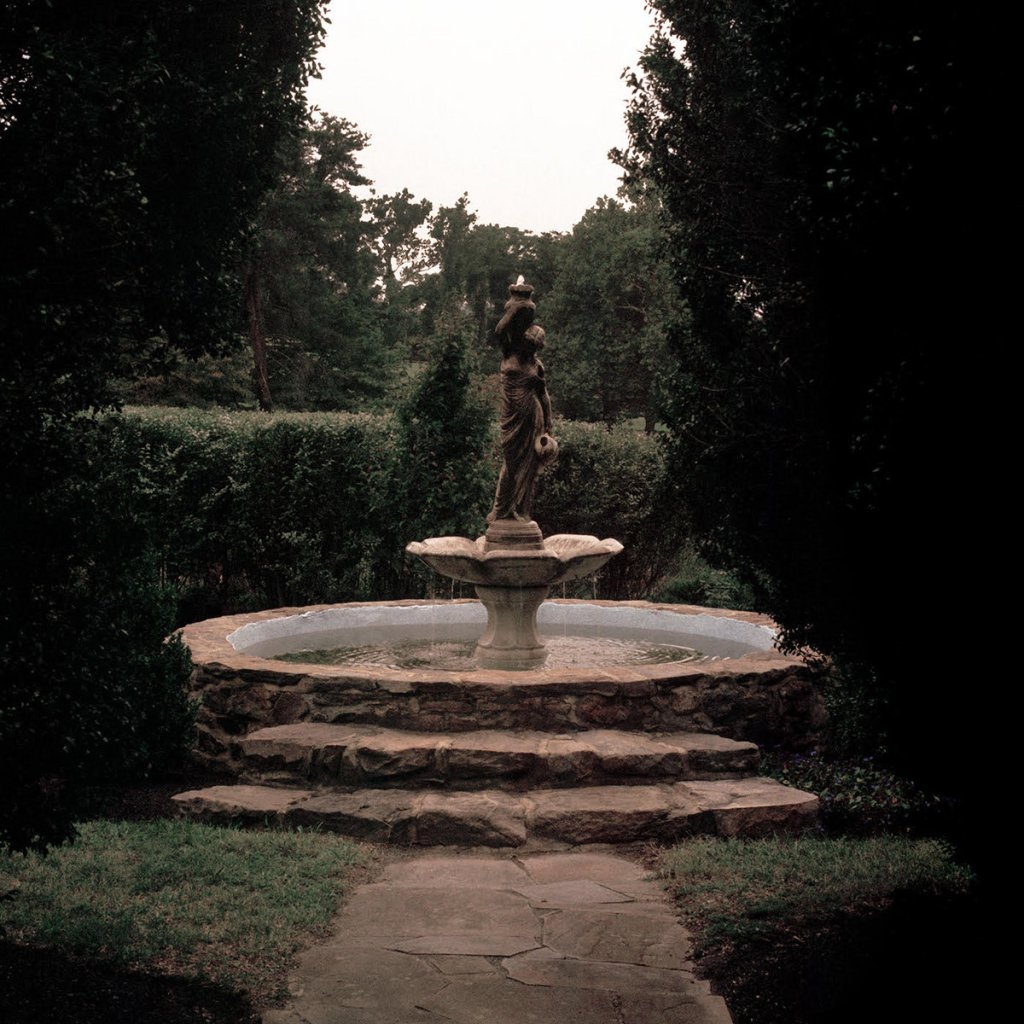
Following this path of work, Mirror Ensemble, the new Brett Naucke’s album, is an imaginary soundtrack to Mirror, the 1975 Andrei Tarkovsky semi-autobiographical movie. It also is a sort of sequel to Naucke’s 2018 album The Mansion, written during the second half of 2018, recorded before covid struck, and released this week for the ever more reliable American Dreams Record. In both The Mansion and Mirror Ensemble Brett Naucke is joined by Natalie Chami (TALsound) and Whitney Johnson (Matchess), now a perfectly synchronised duo active as Damiana, moniker under which they have recently released the excellent Vines.
Mirror Ensemble is thus a “mirror” for Tarkovski’s The Mirror, inspired by the scenes of that film as well by the emotions those scenes provoke in the viewer. Opening-track “Vanity Well” is a perfect overture, and maybe among the tracks of the album is the one more linked to the previous Naucke production. A texture of synths and drum machine give way to a fanfare with the futuristic synthetic touch of a Giant Claw track: it could fit well as a track on Rankine’s Mirror Guide, or other Orange Milk release. Same mirrors, different reflexes.
“The Glass Shifting,” first single anticipating the album, starts with a sorrowful violin that triggers Chami’s ethereal and fairy singing. Chami’s voice is still leading the scene on “Catch your Breath” and on the beautiful third single “Sleep with your Windows Open,” an elegy for piano, found noises and whispers that truly can seize your mind and take it on another world, while on “A Look That Tells Time” (by far my favorite track) you can listen the three individuality blend together on a cinematic mini-suite that mix small touches of percussive field-recordings, a melodic viola line and a quasi kosmische coda. Kosmische that is protagonist on “Parallax,” “Rose Water” and the closing-track “Late-Century Reflection”: a perfect title for a perfect ending of what actually is a reflection, an album mirroring a movie in its scenes, its narrative and its content, creating a new and independent narrative in doing so. Naucke, Chami and Johnson prove that the best way to describe a movie and use it as a starting point for a brand new form, is with experimental music like this. Here three different sensibilities join together in something that lives in the crossing between soundtrack, improvisation, experimental electronic and sheer beauty.
versione italiana
Alcuni anni fa Lucrecia Dalt ha detto che era solita riprodurre film senza sonoro mentre componeva e registrava la sua musica: le scene del film le hanno fornito un’adeguata ispirazione per la musica di Commotus e quella strana ekphrasis è continuata su Syzygy che suona come una strana colonna sonora per un Film di Lynch. L’anno scorso Domenique Dumont è stato invitato a comporre una vera e propria colonna sonora per la proiezione del vecchio film People on Sunday, in parte documentario, in parte finzione, scritto da Billy Wilder. Quindi, sebbene sia ancora un procedimento insolito, non è del tutto nuovo che un musicista componga colonne sonore spurie per film reali. In fin dei conti ambient e soundscape spesso non sono che colonne sonore per film o percorsi immaginari.
Seguendo questo filone, Mirror Ensemble, il nuovo album di Brett Naucke, nasce come colonna sonora immaginaria de Lo specchio, film semi-autobiografico di Andrei Tarkovsky del 1975. È però anche una sorta di sequel di The Mansion, il precedente album di Brett Naucke del 2018, sequel scritto durante la seconda metà del 2018, registrato prima che il covid si mettesse in mezzo e realizzato oggi per la sempre più affidabile American Dreams Record. In entrambi gli album Brett Naucke è affiancato da Natalie Chami (TALsound) e Whitney Johnson (Matchess), ormai un duo perfettamente sincronizzato attivo come Damiana, moniker con cui hanno recentemente pubblicato l’eccellente Vines appena un tre mesi fa.
Mirror Ensemble è quindi uno “specchio” per Lo specchio di Tarkovski, ispirato dalle scene di quel film e dalle emozioni che quelle scene provocano nello spettatore. La traccia di apertura “Vanity Well” è una perfetta ouverture, e forse tra le tracce dell’album è quella più legata alla precedente produzione di Naucke: una tessitura di synth e drum machine lascia il posto a una fanfara con il tocco sintetico e futuristico di una traccia di Giant Claw: potrebbe tranquillamente stare bene su Mirror Guide di Rankine, o su un altro titolo di Orange Milk. Stessi specchi, riflessi diversi.
“The Glass Shifting”, primo singolo che anticipa l’album, inizia con un violino accorato che innesca il canto etereo e fatato di Natalie Chami. La voce di Chami è ancora protagonista della scena in “Catch your Breath” e nel bellissimo terzo singolo “Sleep with your Windows Open,” un’elegia per pianoforte, found noises e sussurri che riesce davvero rapirti la mente e portarla su un altro mondo, mentre “A Look That Tells Time” (di gran lunga la mia traccia preferita) tre individualità si fondono insieme in una mini-suite cinematografica che mescola piccoli tocchi di field-recording percussivi, una linea melodica di viola e una coda di organo quasi kosmische. Kosmische che torna protagonista su “Parallax”, “Rose Water” e sulla closing-track “Late-Century Reflection”: un titolo perfetto per un finale perfetto di quello che è di fatto un riflesso, un album che rispecchia un film nelle sue scene, nella sua narrazione e nel suo contenuto, creando così una narrativa nuova e indipendente. Naucke, Chami e Johnson dimostrano che il modo migliore per descrivere un film e usarlo come punto di partenza per una nuova narrazione è con della musica sperimentale come questa.
 listening wind