english version
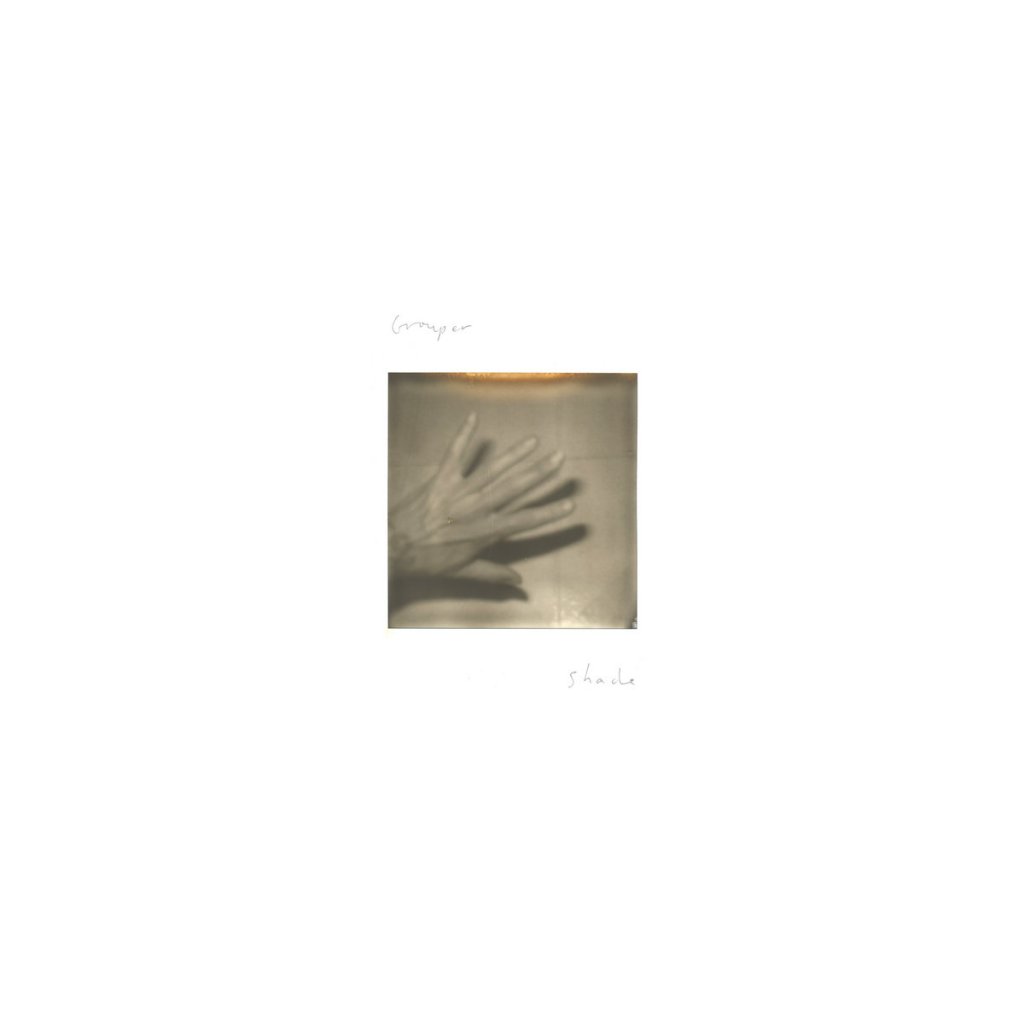
Some times ago on his Twitter account Fred Thomas noted that “every album that receives even moderate critical attention should include and additional record of the demos, because they will be better.” What if those albums were released directly in their demo version? It seems exactly what Grouper has done with Shade, an album containing mostly old songs in their embryonal status. Apparently part of the album comes from old session recorded during a residency at her brother’s home in Mount Tamalpais, near San Francisco in 2012, another part come from even older sessions recorded in Portland in 2008, and some tracks were instead recorded recently in Astoria, where she lives and runs an art gallery. The result is a true and tardive ambient-folk manifesto by one of the founder godmothers of Ambient Folk, a genre that this very year gave birth to gem like Maxine Funke’s Seance, Karima Walker’s Waking the Dreaming Body and Devin Shaffer’s In my Dreams I’m There.
Here everything is demured, whispered, barely present. It seems that Liz Harris had spent the last ten years to strip down this songs, waiting for them to grow rawer and softer, like a hand-written page yellowed and blurred by the passing time: you can almost read what it’s written, but you have to squeeze your eyes a bit, and pay attention to the sings and words on the paper just to make out their meaning.
It’s an attention demanded not with virtuoso gimmick, an information not overloaded but shrinked to its most essential elements, where nuances, blemishes, noises and errors are part of the message and not something to erase and correct. On “The Way her Hair Falls” for example Harris’ voice stumble on a guitar chord (min. 2:03), she stops for half a second and then resume playing and singing a song that you understand is made up exactly of this: whispers, silences, flaws and a barely touch guitar arpeggio. A short-sighted producer would have removed all of this, and by doing so he would have removed the very meaning of a song in which even the scrape of Harris’ fingers on the guitar fretboard is indeed part of the song. Opener “Followed the ocean” – a reminder that the entire album is also an ode to the “radical flow” of the Columbia River flowing into the ocean – is a pas-des-deux between presence and disappearance: you can hear Harris’s voice struggles to emerge from the noise to find its shape.
Harris says that she knew from the very beginning, from the very first tracks she realised in 2012, that what she was creating had to end up on an album that was be called Shade, and songs like “Pale Interior,” “Disordered Minds” and “Basement Mix” are shade of lo-fi noise, ambient drones and swirling of whispering chanting that give a shelter from the everyday crippling and frenzy over-information. Closing-track “Kelso (Blue Sky)” and the folk-grunge single “Unclean Mind” opportunely inserted one at the beginning and one at the end of the album, are the only moments of light, of linearity and worldliness corroded by that shade which is above all refuge and comfort.
versione italiana
Poco tempo fa sul suo account Twitter Fred Thomas ha osservato che “ogni album che riceve un’attenzione critica anche moderata dovrebbe includere un disco aggiuntivo con le versioni demo, perché saranno migliori”. E se quegli album venissero pubblicati direttamente nella loro versione demo? Sembra esattamente quello che Grouper ha fatto con Shade, un album contenente per lo più vecchie canzoni nel loro stato embrionale. Parte dell’album proviene da vecchie sessioni registrate durante una residenza a casa di suo fratello a Mount Tamalpais, vicino a San Francisco, nel 2012, un’altra parte proviene da sessioni ancora più vecchie registrate a Portland nel 2008, e alcuni brani sono stati invece registrati di recente ad Astoria, dove Liz Harris vive e gestisce una galleria d’arte. Il risultato è un vero manifesto tardivo di una delle madrine fondatrici dell’ Ambient Folk, genere che solo quest’anno ha regalato gemme come Seance di Maxine Funke, Waking the Dreaming Body di Karima Walker e In my Dreams I’m There di Devin Shaffer.
Qui tutto è riservato, sussurrato, appena presente. Sembra che Liz Harris abbia passato gli ultimi dieci anni a smontare queste canzoni, aspettando che si facessero più crude e più esili, come una pagina scritta a mano ingiallita e sbiadita dal tempo che passa: puoi quasi leggere quello che è scritto, ma devi stringere un po’ gli occhi e prestare estrema attenzione ai segni e alle parole sulla carta per capirne il significato.
È un’attenzione richiesta non con inutili gesti virtuosistici, e un’informazione non sovraccarica ma ridotta ai suoi elementi più essenziali, dove sfumature, rumori, difetti e errori sono parte del messaggio e non qualcosa da cancellare e correggere. In “The Way her Hair Falls” ad esempio la voce di Harris inciampa su un accordo di chitarra (min. 2:03), si ferma per mezzo secondo e poi riprende a suonare e a cantare una canzone che capisci è composta esattamente da questo: sussurri, silenzi, difetti e un arpeggio di chitarra appena sfiorato. Un produttore poco attento avrebbe rimosso tutto questo, e così facendo avrebbe rimosso il senso stesso di una canzone in cui anche lo sfregamento delle dita sul manico della chitarra è di fatto parte della canzone. La traccia d’apertura “Followed the ocean” – un promemoria che l’intero album è anche un’ode al “flusso radicale” del fiume Columbia che si riversa nell’oceano – è un pas-des-deux tra presenza e scomparsa: si sente la voce di Harris che fatica ad emergere dal rumore per trovare la sua forma.
Harris dice che sapeva fin dall’inizio, dalle primissime tracce che ha realizzato nel 2012, che quello che stava creando doveva finire su un album che doveva essere chiamato Shade, e canzoni come “Pale Interior”, “Disordered Minds” e ” Basement Mix” sono sfumature di rumore lo-fi, droni ambientali e vortici di sussurri che danno un riparo dall’eccessiva informazione paralizzante e frenetica di tutti i giorni. La traccia di chiusura “Kelso (Blue Sky)” e il singolo folk-grunge “Unclean Mind” opportunamente inseriti uno all’inizio e uno alla fine dell’album, sono gli unici momenti di luce, di linearità e mondanità corrosi da quell’ombra che è soprattutto rifugio e conforto.
 listening wind