| English Version | Vai alla versione italiana |
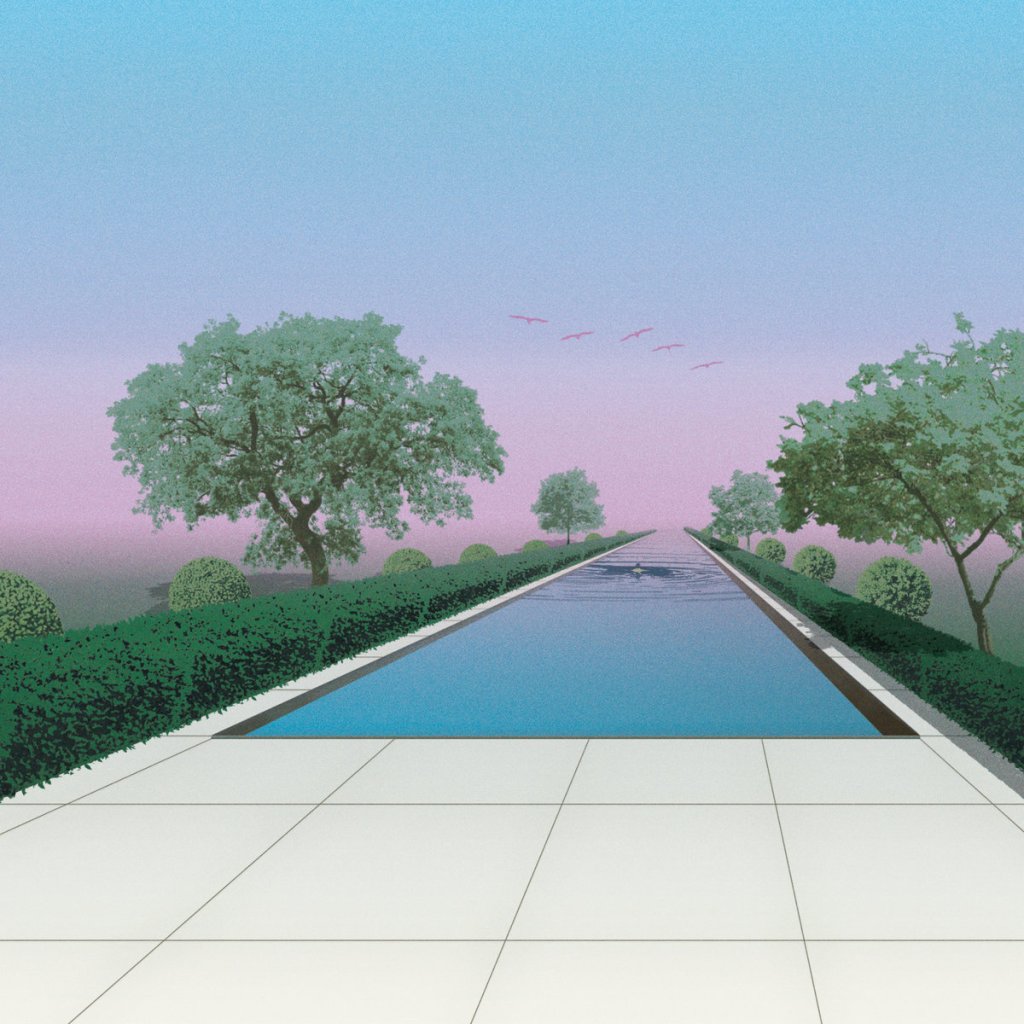
A Leisurely Swim to Everlasting Life, Ki Oni’s new record, seems to continue the story started with the previous albums An Evening Stroll to the Garden Party, Indoor Plants Life, and Stay Indoors and Swim. The rhythmic patterns, though thin and sparse in Loxodonta, have almost completely disappeared to give space to a more classical form of ambient music, one that invites both calm distraction (the latitude of Music for Airports) and deeper attention (the longitude of the Deep Listening ethics by Pauline Oliveiros). In the five long tracks, three of which exceed the twenty minutes mark, there are soft bubbles of synth, glimpses of field recordings, gentle drones that wrap you and cradle you in a bath of serenity, but amidst all that magma, thin and delicate threads of melody are clearly visible, a dainty fabric of sound details that asks for your attention. The magic of Ki Oni lies entirely in this ever-present and fluctuating dynamic between attention and distraction, between shapeless nebulae of sounds and melodic silhouettes. One moment you almost fail to notice the music around you, and the next second you discover that you have abandoned the outside world to immerse yourself completely in the interplays that until just a moment ago were merely an idle background. Slowly you realize that each track borns from the melodic design of the previous one, so the melody that was submerged beneath almost liquid flows of drones on “Infinite Dive” becomes the guiding structure of “Floating in a Stream of Consciousness,” where the incursions of field recordings become the canvas on which the drones of “Reincarnation at the End of The World” expand. On “My Grandmother’s Garden,” there is a melodic backbone that almost tears through and opens the curtain of drones, like rays of sun that cut through soft gray clouds. The final track, “To Wander Beyond Acquatic Center,” brings back to the surface the drone flows with which it all began, in a circular movement that reassures and invites the eternal return of the thaumaturgical power of repetition.
| versione italiana | Go to English version |
Con A Leisurely Swim to Everlasting Life, Chuck Soo-Hoo, aka Ki Oni, sembra voler continuare il racconto iniziato coi precedenti An Evening Stroll to the Garden Party, Indoor Plants Life e Stay Indoors and Swim. I pattern ritmici, per quanto esili e rarefatti di Loxodonta sono quasi completamente spariti per lasciare spazio a una musica ambient più classicamente intesa, una musica che inviti tanto alla calma distrazione (la latitudine di Music for Airports), quanto all’attenzione più profonda (la longitudine dell’etica della Deep Listening di Pauline Oliveiros). Nei cinque lunghi brani, 3 dei quali superano i venti minuti, ci sono soffici bolle di synth, sprazzi di field-recordings, droni gentili che ti avvolgono e ti cullano in un bagno di serenità, ma in mezzo a tutto quel magma sono ben visibili sottili e tenui filamenti di melodia, una delicata trama di dettagli sonori che ti invitano all’attenzione. La magia di Ki Oni è tutta qui, nella dinamica sempre presente e altalenante tra attenzione e distrazione, tra nebulose informi di suoni e silhouette melodiche: un minuto ti trovi quasi a non far caso alla musica che hai intorno e il minuto dopo scopri di aver abbandonato il mondo esterno per immergerti completamente negli intrecci che fino a un attimo prima erano appena un ozioso sottofondo. Piano piano ti accorgi che ogni traccia nasce dal disegno melodico della precedente, così la melodia che su “Infinite Dive” era sommersa sotto i flussi quasi liquidi di droni diventa la trama portante di “Floating in a Stream of Consciousness” le cui incursioni di field-recordings diventano la tela su cui si dilatano i droni di “Reincarnation at the End of The World.” Su “My Grandmother’s Garden” c’è una spina dorsale melodica che quasi squarcia e apre il sipario di droni, quasi come raggi di sole che tagliano soffici nubi grigiastre, la conclusiva “To Wander Beyond Acquatic Center” riporta in superficie i flussi di droni con cui tutto era iniziato, in un movimento circolare che rasserena e invita all’eterno ritorno del potere taumaturgico della ripetizione.
 listening wind