| versione italiana | go to English version |
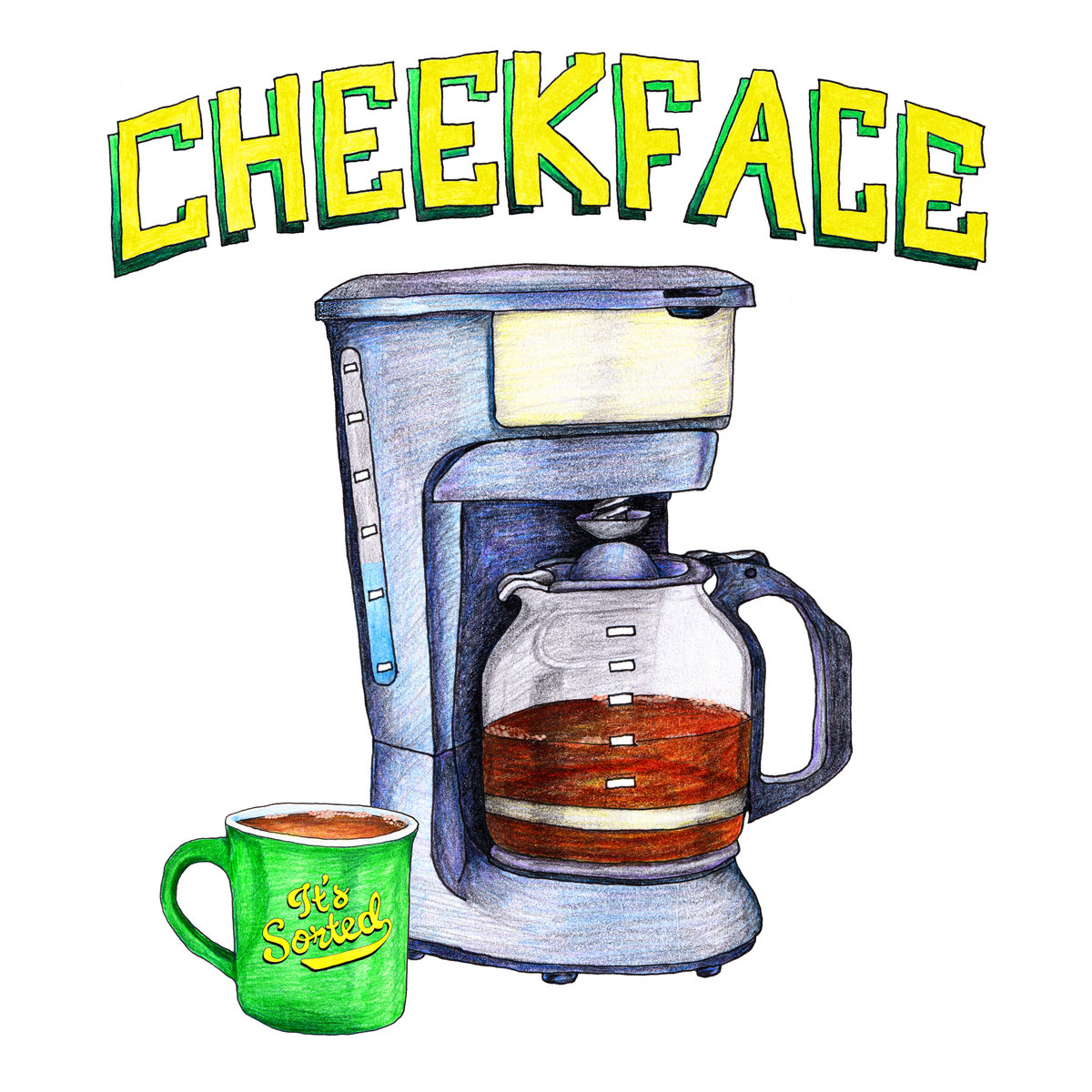
I Cheekface sono un piccolo esempio di Sogno Americano realizzato, non so quanto consciamente. Greg Katz, fresco di laurea, inizia a lavorare per un’etichetta ormai defunta, ne fonda una sua, New Professor Music e intanto inizia a rappresentare dei producer, tra cui Rogét Chahayed, autore e co-produttore di “Broccoli” di DRAM e Lil Yachty, entra a lavorare per un’altra etichetta indipendente, la Defend, dove lavorando con artisti e band più o meno famosi impara “il valore di essere davvero bravi a fare qualcosa che nessun altro sa fare.” Intanto con New Professor Music sono alti e bassi finché non decide di cominciare a scrivere e suonare qualcosa di suo. Incontra Amanda Tannen, allora una graphic design con un passato di bassista per una band del primo revival post-punk degli anni ’00, Stellastarr*, insieme reclutano il batterista Mark Edwards e boom, nascono i Cheekface. Fanno un primo disco (Therapy Island, 2017), un secondo disco (Empathically No., 2020), un terzo (Too Much to Ask, 2022) e restano sempre fieramente e solidamente indipendenti fino al quarto, l’appena uscito It’s Sorted. L’etichetta è sempre la New Professor Music di Greg Katz, le copertine dei loro dischi, singoli e ep compresi, sono tutte disegnate da Amanda Tannen, non hanno nessun manager, nessun ufficio stampa, e soprattutto non hanno nemmeno un briciolo del narcisismo che cova ambizioni da rockstar. Eppure i Cheekface sono diventati un culto indie, tanto da avere un seguito di accaniti fan fedeli disposti a seguirli ovunque, ribattezzatesi Cheek Freaks, equivalente cheekfaciano dei dead head. Una perfetta storia da sogno americano, se non fosse che Katz e compagni sembrano totalmente disinteressati a fama, fortuna, sesso, droga e rock’n’roll. Quella dei Cheekface è un’oasi DIY naturale, regolata da indipendenza e basse aspettative. Pare siano stati anche avvicinati da etichette indipendenti con una base strategica più solida (facile immaginarsi i nomi), ma pare anche che si siano tutte fermate davanti alla fierezza indie di Katz, che intanto ha corredato il gruppo con il nickname “America’s Local Band”: “Quello che facciamo è abbastanza idiosincratico,” dice Katz “Penso che chiunque gestisca un’etichetta discografica percepisca una sconnessione, che noi possiamo essere moderatamente popolari e la cosa ci sta bene. Ma essere moderatamente popolari non funziona bene per le etichette.”
Quest’idea di libera indipendenza e ambizioni contenute viene urlata fin dalle prime note di “The Fringe,” traccia di apertura di It’s Sorted : “Success is cringe, I wanna be on the fringe,” con un ritornello finale in cui la frase “I want to be on the fringe” ricorda molto da vicino quel famoso “I wanna be anarchy” dei Sex Pistols. Unica ma corposa differenza: se i Sex Pistols parlavano la lingua di Nietzsche, del nichilismo e dell’autodistruzione, Katz, novello Candide, parla la lingua di Voltaire, non vuole incendiare né distruggere niente perché è tutto già distrutto e in fiamme, si limita a notare con disinvolta ironia che siamo proprio noi a rendere peggiore il “migliore dei mondi possibili.” Ironia, quindi, e tanto umorismo che li avvicina, non solo musicalmente, ai They Might Be Giant, un tocco surreale molto in stile David Byrne nell’era dei Talking Heads, la sfacciataggine dei Devo e lo stesso distaccato spleen confessionale di un Lou Reed commentatore dell’esistenza umana. Anche It’s Sorted, come i dischi precedenti, è una macedonia di tutto questo, dei ritmi freschi che si spingono anche in territori funkeggianti, chitarre limpide e pulite ma taglienti, melodie incisive costruite su brandelli quasi parlati. Così “Popular 2” si avvicina ai Cake, la doppietta “I am Counting to do my Thing” e “Grade School” entrano nei territori disco-funk dei Talking Heads di Remain in Light, con tanto di sax, “Trophy Hunting at the Zoo” richiama i B-52s e “Don’t Stop Believing,” oltre a funzionare come auto-citazione (il vecchio singolo “S . T . O . P. B . E . L . I . E . V . I . N . G.”), è una strizzatine d’occhio ai Green Day, America’s Non Local Band (coverizzati un paio di anni fa).
Apparentemente niente di nuovo, un altro gruppo indipendente di power-pop oscillatesta che sciorina un commentario vivo e vivace sul tardo capitalismo e la sua sovrapproduzione di stati di ansia collettiva. Quello che rende unici i Cheekface è la capacità di essere autentici e soprattutto convincenti. Le loro canzoni non suonano mai come la chiusura forzata della battuta di un comico che cerca disperatamente di far ridere, sono più vicine alla vis comica noir e icastica di Melissa Broder come So Sad Today. Sono canzoni sincere, vere, amare ma divertenti allo stesso tempo (castiga ridendo mores), e costruite su frasi che ti restano appiccicate addosso tipo (“Everybody wants to ruin the world,” “Mentally I’ll be fine,” “And who could blame me? I live in a society,” “The future is now, unfortunately”) che potrebbero diventare (anzi sono diventate) aforismi per vivere meglio la nostra condizione di contemporanei della fine del mondo.
| English version | vai alla versione italiana |
Cheekface is a small example of the American Dream realized, I’m not sure how consciously. Greg Katz, fresh out of college, worked for a while for a now-defunct label, founded his own, New Professor Music, and meanwhile began representing producers, including Rogét Chahayed, author and co-producer of DRAM and Lil Yachty’s “Broccoli.” He then went on to work for another independent label, Defend, where working with more or less famous bands and arthists he learned “the value of being really great at something that no one else can do.” Meanwhile, New Professor Music was having its ups and downs until he decided to start writing and playing something of his own. He met Amanda Tannen, then a graphic designer with a past as a bassist for Stellastarr*. a band from the early 2000s post-punk revival. Together they recruited drummer Mark Edwards and boom, Cheekface was born. They released a first album (Therapy Island, 2017), a second album (Empathically No, 2020), and a third (Too Much to Ask, 2022), and remained proudly and solidly independent until the fourth, the newly released It’s Sorted. The label is still Greg Katz’s New Professor Music, the covers of their albums, singles, and EPs, are all designed by Amanda Tannen, they have no manager, no press office, and above all, not a whiff of the narcissism that harbors rockstar ambitions. Yet Cheekface has become an indie cult, enough to have a devoted following willing to follow them anywhere, the Cheek Freaks, the cheekface equivalent of dead heads. A perfect American Dream story, if it weren’t for the fact that Katz and his bandmates seem completely uninterested in fame, fortune, sex, drugs, and rock’n’roll and whatnot. That of Cheekface is a natural DIY oasis, regulated by an unassuming ethos and low expectations. It seems they were also approached by independent labels with a more solid strategic base (it’s easy to imagine which), but it also seems that they all stopped in front of Katz’s indie pride, who meanwhile has dubbed the group with the nickname “America’s Local Band”: “What we do is pretty idiosyncratic,” says Katz, “I think that anyone who owns a label senses that disconnect, that we can be modestly popular and that can work for us. But being modestly popular doesn’t work that well for labels.”
This idea of free independence and contained ambitions is shouted out from the very first notes of “The Fringe,” the opening track of It’s Sorted: “Success is cringe, I wanna be on the fringe,” with a final chorus in which the phrase “I want to be on the fringe” closely resembles the famous “I wanna be anarchy” by the Sex Pistols. The only substantial difference: if the Sex Pistols spoke the language of Nietzsche, of nihilism and self-destruction, Katz, a modern Candide, speaks the language of Voltaire. He doesn’t want to ignite or destroy anything because everything is already destroyed and in flames; he simply notes with casual irony that we ourselves make the “best of all possible worlds” worse. Irony, therefore, and plenty of humor that brings them closer, not only musically, to bands like They Might Be Giants, with a surreal touch very much in the style of David Byrne in the era of Talking Heads, the audacity of Devo, and the same detached confessional spleen of a Lou Reed posing as a flaneur commenting on human existence. It’s Sorted, like the previous records, is a mix of all this, with fresh rhythms that also venture into funky territories, clean and sharp guitars, incisive melodies built on almost spoken fragments. So “Popular 2” approaches the style of Cake, the pair “I am Counting to do my Thing” and “Grade School” delve into the disco-funk realms of Talking Heads’ Remain in Light, sax solo included. “Trophy Hunting at the Zoo” recalls the B-52s, and “Don’t Stop Believing,” besides serving as a self-reference (to the old single “S . T . O . P. B . E . L . I . E . V . I . N . G.”), is a nod to the Green Day, America’s Non Local Band (covered a couple of years ago here).
Apparently nothing new, just another independent power-pop band bobbing their heads to the sound of guitar while delivering a lively and vivid commentary on late capitalism and its overproduction of collective anxiety states. What makes Cheekface unique is their ability to be authentic and, above all, convincing. Their songs never sound like the forced punchline of a stand-up comedian desperately trying to make people laugh; they are closer to the noir and sardonic humor of Melissa Broder/So Sad Today. They are sincere, genuine, bitter yet funny at the same time (castiga ridendo mores), and built on phrases that stick with you, like “Everybody wants to ruin the world,” “Mentally I’ll be fine,” “And who could blame me? I live in a society,” “The future is now, unfortunately,” which could become (and have become) aphorisms to better navigate our condition as contemporaries of the end of the world.
 listening wind